
All cryptocurrencies
Monero is unique in that it prioritizes privacy and anonymity, offering features like ring signatures and stealth addresses. Its CPU-mining-friendly algorithm makes it an attractive option for smaller-scale miners https://allaboutfireprotection.net/.
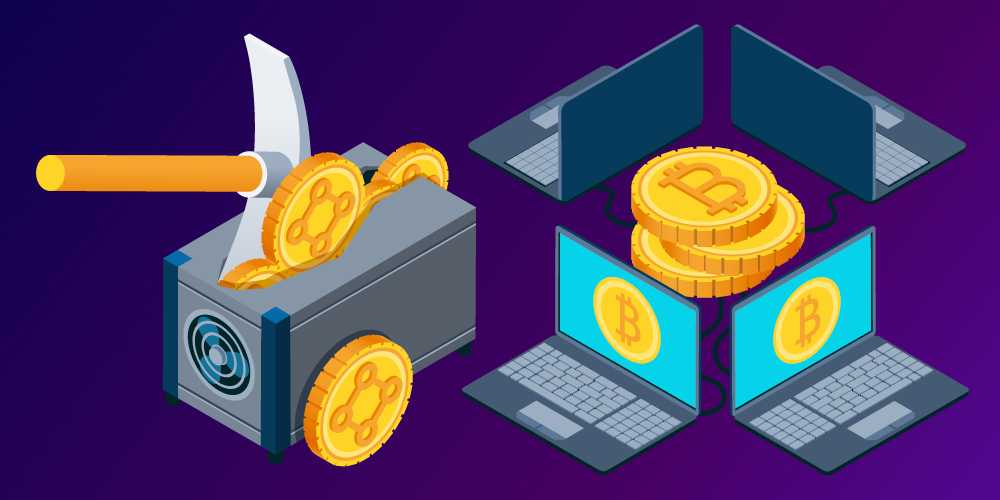
Cryptocurrency mining describes a process where an individual, group of individuals, or a business, will use high-powered computers to solve complex mathematical equations in an effort to validate a block of transactions. These mathematical equations are part of the encryption that protects transactions from cybercriminals, as well as other people who shouldn’t have access to sender and receiver data.
The total number of bitcoins issued is not expected to reach 21 million. That’s because the Bitcoin network uses bit-shift operators—arithmetic operators that round some decimal points down to the closest smallest integer.
Do all cryptocurrencies use blockchain
The main pros of DAG networks have to do with mining. Because no mining takes place, there are no mining fees associated with making DAG transactions. Seeing how block rewards are falling, mining fees are bound to rise in order to incentivize miners to continue mining. In that respect, a system that would eliminate mining fees altogether looks promising for the future.
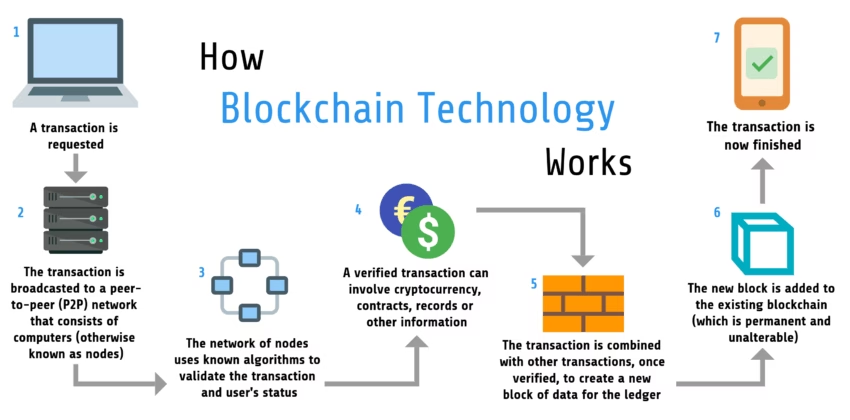
Not all blockchains follow this process. For instance, the Ethereum network randomly chooses one validator from all users with ether staked to validate blocks, which are then confirmed by the network. This is much faster and less energy intensive than Bitcoin’s process.
While confidentiality on the blockchain network protects users from hacks and preserves privacy, it also allows for illegal trading and activity on the blockchain network. The most cited example of blockchain being used for illicit transactions is probably the Silk Road, an online dark web illegal-drug and money laundering marketplace operating from February 2011 until October 2013, when the FBI shut it down.
The main pros of DAG networks have to do with mining. Because no mining takes place, there are no mining fees associated with making DAG transactions. Seeing how block rewards are falling, mining fees are bound to rise in order to incentivize miners to continue mining. In that respect, a system that would eliminate mining fees altogether looks promising for the future.
Not all blockchains follow this process. For instance, the Ethereum network randomly chooses one validator from all users with ether staked to validate blocks, which are then confirmed by the network. This is much faster and less energy intensive than Bitcoin’s process.
Are all cryptocurrencies based on blockchain
Privacy coins are designed to keep your financial transactions confidential. While most cryptocurrencies operate on transparent public ledgers, privacy coins use advanced cryptographic techniques to hide transaction details such as wallet addresses and transferred amounts. These coins offer greater anonymity and are often preferred by users who prioritise data protection in an increasingly transparent financial environment.
Blockchain comprises four components. The first is a peer-to-peer network, which is accessible to everybody. This is essentially what the Internet provides us with now. We require this network in order to converse and share information with one another remotely.
Perhaps the most profound facet of blockchain and cryptocurrency is the ability for anyone, regardless of ethnicity, gender, location, or cultural background, to use it. According to The World Bank, an estimated 1.4 billion adults do not have bank accounts or any means of storing their money or wealth. Moreover, nearly all of these individuals live in developing countries where the economy is in its infancy and entirely dependent on cash.
No comment